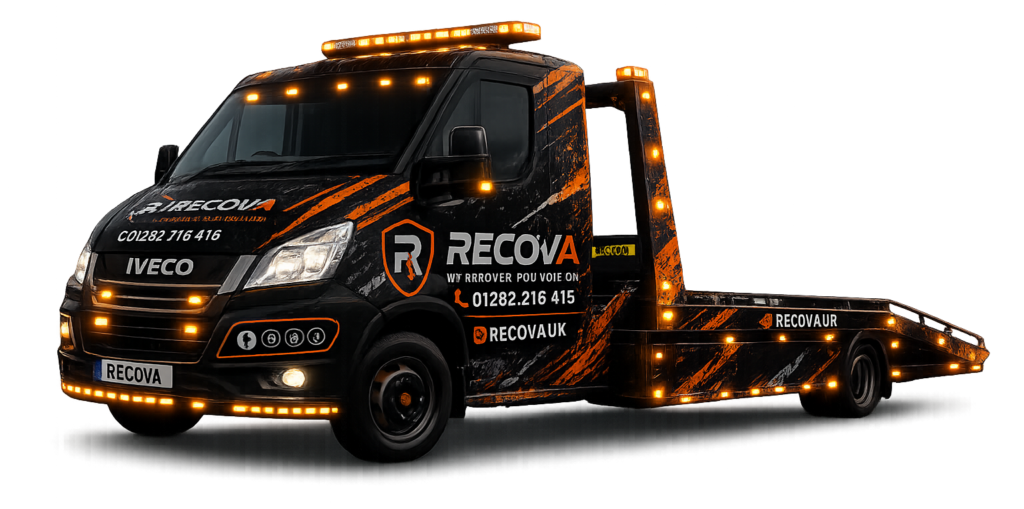
Accident Vehicle Repairs
From vehicle recovery and damage assessment to repair coordination and collection, Recova helps connect eligible motorists with a clear accident-repair process.
Repairing Your Vehicle After an Accident
Accident damage is not always limited to what can be seen externally.
A damaged bumper or body panel may conceal problems involving mounting points, impact structures, sensors, suspension, steering or electronic driver-assistance systems.
The vehicle should be assessed before repair work begins so that the visible and underlying damage can be recorded and the appropriate repair method agreed.
Six Stages of Accident Repair
1. Vehicle Recovery
The damaged vehicle is collected and moved to an agreed storage, assessment or repair location.
2. Damage Inspection
The repairer records the damage and identifies areas requiring further investigation.
3. Repair Estimate
An estimate is prepared covering labour, parts, paint, materials and necessary calibration work.
4. Authorisation
The relevant insurer or claim provider reviews the estimate and decides whether repairs should proceed.
5. Repair and Quality Control
Approved work is completed and checked before the vehicle is released.
6. Vehicle Return
The customer is updated, the repaired vehicle is collected or delivered and any concerns are recorded.
Repairable or Total Loss?
Repairable
The vehicle can be restored safely and the repair is authorised.
Economically Uneconomical to Repair
The estimated repair cost is considered too high compared with the vehicle’s pre-accident value.
Structurally or Technically Unsuitable for Repair
The damage may prevent an appropriate safe or proportionate repair.
Subject to Further Inspection
The visible damage does not reveal the full extent of the required work. An insurer may consider repair costs, vehicle value, salvage value, parts availability and safety when deciding whether to repair or write off a vehicle.
What Happens When Additional Damage Is Found?
Sometimes further damage becomes visible after panels and components are removed.
The repairer may submit a supplementary estimate showing:
- Newly identified damage
- Additional parts
- Extra labour
- Specialist work
- Diagnostic or calibration requirements
- A revised completion date
Additional work normally requires authorisation before it proceeds.

Repair Delays
Delays can occur because of:
- Parts availability
- Back-ordered components
- Specialist calibration
- Engineer approval
- Hidden damage
- Repairer capacity
- Manufacturer repair procedures
- Liability or funding disputes
Where repair delays become unreasonable, insurers should communicate what is causing them and consider what can be done to reduce customer inconvenience. The Financial Ombudsman considers communication, reasonable repair times, replacement vehicle provision and evidence of repair quality when reviewing complaints.
Before Accepting the Repaired Vehicle
Bodywork
Check panel alignment, gaps, paint finish and the repaired area in good lighting.
Warning Lights
Confirm no unexpected warning messages remain.
Vehicle Functions
Check lights, parking sensors, cameras, windows and relevant electronic equipment.
Driving Condition
Report unusual steering, vibration, noises or handling immediately.
Documentation
Request the repair invoice, guarantee and relevant calibration information where applicable.
Need Vehicle Recovery Now?
Whether you’ve broken down, been involved in an accident or need a vehicle transported, Recova is ready to help. Call our team now for fast, professional vehicle recovery across Burnley, Lancashire and the surrounding areas.